

PROGRAM DETAILS
Monday, June 15, 2026
Monday’s theme is Grounding & Planting, focusing on the roots of our food systems.
This day will explore people, places, and knowledge that create the foundations of our food systems. We will ground ourselves in the teachings of Indigenous stewards of the land before planting seeds of discussion that will grow throughout the conference.
Campus Food-system Adventure (10 am - 11:30 am) Meet at Simcoe Hall entry
The tour will begin at the main entrance to Simcoe Hall at 10am til 11:30am.
(Lots of time to register for the forum when you get back to Simcoe Hall).
Optional invitation to get your hands into soil and plant a few seedlings to support the garden.
If you have any questions, please contact kearey-morelandj@lakeheadu.ca
Opening Session – Introductory themes, welcome, traditional opening (12:00 pm - 1:00 pm - Rooms OA1033 & OA1022)
Opening session to the Common Ground Food Forum presented by:
Dr. Linda Rodenburg, Principal
Dr. Langis Roy, Lakehead Vice-President of Research and Innovation
Councillor Anne Harrigan, Rama First Nation
Plenary - Indigenous Food Sovereignty (1:00 pm - 2:30 pm - Room OA1033 & OA1022)
 Dawn Morrison
Dawn locates herself in the Indigenous Food Sovereignty movement as a Secwepemc woman in leadership. Her role as Founder/Curator of Research & Relationships for the Working Group on Indigenous Food Sovereignty, was inspired by the intellectual foundation laid by Elders, ancestors, and former leaders in her Neskonlith Secwepemc community who upheld a long legacy of political activism. Her work towards social and environmental justice is intrinsically motivated by her lived experience as the eldest survivor of intergenerational trauma passed down from the Kamloops Indian Residential School where her Mother, maternal Grandmother, and many relatives were forced to spend their childhoods. Since 1983, Dawn has studied and worked in horticulture, agriculture, Aboriginal Adult Basic Education, ethno-botany, and restoration of natural systems. She returned home to reclaim her sense of Secwepemc identity in the year 2000, and began her work on community self-development in her home Neskonlith Secwepemc community in the framework of eco-cultural restoration, and Indigenous food sovereignty. She has since demonstrated her commitment and ability to facilitate social learning on the edges of diverse cultures and realities in land and food system networks more broadly. Dawn has developed an Indigenous Third Eye Seeing (ITES) Methodology to guide the process of creating ethical spaces of engagement in land and food systems policy, planning and governance. The intention is to increase agency of Indigenous Peoples and allied friends to address the issues underlying the wicked systemic problems of coloniality, climate change, corporate control, and the erosion of social and ecological integrity of Indigenous land, food, culture and social systems. Some of the projects Dawn is leading include: “From the Ground Up” Toolkit for Indigenous Food Sovereignty – Train the Trainers, Wild Salmon Caravan, Cwelcwelt Kuc “We are Well” Garden, Indigenous Food and Freedom School, and research projects: Mapping out and Advocating for the Establishment of Indigenous Foodland Conservation Areas, and Indigenous Food Sovereignty and Community Wellbeing Amidst a Pandemic.
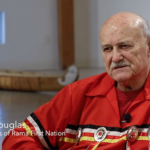 Mark Douglas
Mark Douglas is a respected Elder, Knowledge Keeper, and founder of the Mnjikaning Fish Fence Circle from the Chippewas of Rama First Nation. He is a prominent cultural advocate dedicated to protecting the ancient Mnjikaning Fish Weirs and sharing Anishinaabe storytelling, heritage, and history.
 Raymond Johnson-Brown
Seeds of Sovereignty is a living, Indigenous-led reflection on what food sovereignty looks like when it is practiced, not theorized, amidst diverse First Nations, Inuit & Metis communities. Grounded in gatherings held in Iqaluit, Nunavut and Líl̓wat Nation, we will share our learnings that arose from Indigenous Community Food Centres and Indigenous Network members who are already feeding their communities through hunting, harvesting, land-based teaching, and intergenerational knowledge transfer. This submission isn’t meant to present a new model or best-practice framework. Rather, it offers a collective account of what is already happening when Indigenous food systems are allowed to exist on their own terms. Across Arctic, coastal, forest, and prairie contexts, communities are asserting food sovereignty through country food programs, youth-led harvesting, Elder-led teaching, and governance rooted in Indigenous law. These are not symbolic, but are living systems that are grounded in recirpocal relationship to land and responsibility. During the session we will name the barriers weve identified that continue to constrain this work: short-term and misaligned funding cycles, public health and licensing regimes designed for industrial food systems, limited land access, and policy environments that treat Indigenous law as opinion rather than authority. Rather than positioning communities as service providers within colonial systems, Seeds of Sovereignty reframes Indigenous food sovereignty as an expression of jurisdiction, wellness, and self-determination affirmed under UNDRIP. Participants will be invited to sit with a core question that emerged repeatedly across the gatherings: if Indigenous communities are already doing the work, what needs to shift in governments, institutions, and the food movement to protect and resource what is already alive? This session is an invitation to move beyond urgency and extraction, and toward accountability and trust at the pace of the land.
Presentations - Strengthening the equity and sustainability of Canada's food systems: The value of immigrant food security, cultural food access, and entrepreneurial innovation (3:00 pm - 4:30 pm - Room OA1022)
Strengthening the equity and sustainability of Canada’s food systems: The value of immigrant food security, cultural food access, and entrepreneurial innovation
Moderated by: Sara Edge
In Canada, more than 10 million people experience food insecurity, with immigrants disproportionately affected. Among those who arrived within the past ten years, 26.1% face food insecurity compared to 21.5% of Canadian-born individuals, with even higher rates among racialized groups. These disparities are rooted in colonial and exclusionary food systems that continue to produce structural inequities. Immigrants often face barriers beyond income, including labour precarity, housing insecurity, limited social supports, restricted access to culturally appropriate foods, and challenges related to language, citizenship, and unfamiliarity with local food environments. Additionally, their food-related skills and knowledge are frequently unrecognized, limiting participation in agri-food economies. Emerging scholarship highlights that immigrants’ needs and contributions remain under-recognized, pointing to the need for more intentional inclusion in food systems. This Special Session responds by exploring pathways to strengthen immigrant engagement in community food initiatives, food entrepreneurship, and mentorship. It brings together community-engaged scholars to examine how inclusive approaches can address food insecurity while supporting sustainable livelihoods. By bridging community food security and food innovation, this session emphasizes the importance of centering immigrant leadership and contributions to build more equitable and resilient food systems in Canada.
Unveiling informal food spaces: Constraints and agency in immigrant food entrepreneurship in Canada’s contemporary food systems.
Jenelle Regnier-Davies
In Canada, racialized immigrants face intersecting socio-economic and environmental inequities, including limited access to affordable, nutritious, and culturally appropriate food, barriers to secure employment, restricted mobility, and insufficient community supports. In response, many turn to informal, unregulated food enterprises as strategies to generate livelihoods and meet unmet community needs. While these spaces are vital, they often face heightened scrutiny and sanctions from public authorities, frequently justified through food safety and regulatory concerns, which can intensify barriers for immigrant entrepreneurs. This paper examines how migrant food entrepreneurs navigate these constraints while creating opportunities within Canada’s evolving food system. Drawing on 15 interviews and three focus, this study highlights the practices, opportunities, and structural challenges shaping participation in informal food economies. Focusing on the underserved region of Scarborough, the study highlights the practices, opportunities, and structural constraints shaping participation in informal food economies. The lived experiences of immigrant entrepreneurs contrast sharply with dominant policy and institutional perspectives on infrastructure, resources, and regulatory frameworks intended to support food business development within migrant communities.
Cultural food security among older immigrants: A provincial survey with Meals on Wheels across Ontario
Yukari Seko
Food security among seniors is a multifaceted issue. Although Canadians aged 65 and older experience lower levels of financial food insecurity than working-age adults, one-third of community-dwelling seniors are reportedly at risk of malnutrition. Limited transportation, bereavement, social isolation, and low digital literacy are among the factors that negatively influence senior‚Äôs daily food access. In addition to these barriers, older immigrants may face unique challenges, including language barriers, loss of family and community support, and limited access to culturally preferred foods. According to the 2021 Census, 71% of residents aged 65 and older in the Toronto Census Metropolitan Area were immigrants born outside Canada. Yet, little is known about food security among this rapidly aging immigrant population. Meals on Wheels (MOW) programs deliver nutritious meals directly to clients in their homes. Existing studies consistently show that MOW programs support healthy eating and help seniors maintain independence within their communities. However, there is limited research on the extent to which MOW programs in Ontario offer culturally appropriate meals. In this panel I share findings from our 2025 province-wide survey with 63 MOW programs. Most programs rated the importance of cultural meals highly and reported that they are meeting clients’ cultural needs reasonably well, either because their client populations largely align with meals they offer or because programs allow some menu flexibility. However, two-thirds of respondents reported unmet, growing, or anticipated demand for culturally appropriate foods. Across the province, the most common barriers to offering culturally appropriate meals include difficulty securing food suppliers, funding limitations, uncertainty about clients‚Äô cultural preferences, and limited familiarity with diverse cuisines. Programs expressed strong interest in additional support, especially increased funding, access to culturally knowledgeable food providers, partnerships with community organizations, and training on culturally inclusive meal preparation.
Empowering immigrant farmers: Unpacking the extension activities of the Institute for Sustainable Food Systems’ Richmond Farm School (RFS)
Wallapak Polasub
The current food system environments in which immigrants participate often render them marginalized, largely due to systemic barriers such as racism, credential recognition challenges, and language barriers. In order to create equitable and sustainable food systems, we need to recognize the importance of the food system to immigrants and the role they can play within it. The Institute for Sustainable Food Systems’ Richmond Farm School (RFS) seeks to assess a pathway into the food system intended to empower immigrants through a farmer training program that aims to support community food security and small-scale immigrant entrepreneurship. The RFS offers informal, hands-on experiential learning in regenerative agriculture, as well as farm business incubator opportunities, to underserved communities through collaborations with local not-for-profit organizations. Two current initiatives with the Zimbabwe Cultural Society of BC and the Rainbow Refugee Society explore the cultivation of culturally significant crops to support community members while establishing farm business enterprises. Several immigrant and refugee participants have prior agrarian experience and are keen to engage in farming activities but find it difficult to access land in Canada due to high capital costs. The program not only offers new skills, tools, land, and mentorship, but also fosters connections among participants, enabling them to learn from one another in a supportive environment.
Presentations - Foodways perspectives (3:00 pm - 4:30 pm - Room OA1033)
Moderated by: Elif Birbiri
Compétence collective et transformation des systèmes agricoles, halieutiques et alimentaires : une approche par la coopération Canada–Côte d’Ivoire
Yapo Séverin, Lou Tanan Tatiana Ta
Comment la cooperation avec le Canada transformera les systèmes agricoles, halieutiques et alimentaires ivoiriens pour les rendre équitables, durables et autosuffisants? Dépassant l’introduction isolée de technologies, l’hypothèse est de construire des relations sociales capables d’articuler savoirs, pratiques et secteurs d’action. Le développement d’une Compétence collective en transformation des systèmes alimentaires (2CTSA) dépendra de quatre facteurs interdépendants : la circulation des savoirs entre les disciplines agricoles, halieutiques et celles liées à l’industrie alimentaire ; la création de synergies entre secteurs régaliens de l’agriculture, de l’industrie et de l’alimentation ; la promotion de technologies agricoles adaptées et l’industrialisation progressive de l’agriculture ; la mise en réseau durable d’acteurs impliqués dans les systèmes alimentaires. La 2CTSA requiert l’émergence de nouvelles formes de collaboration en recherche, fondées sur le rassemblement de chercheurs, d’industriels, d’agriculteurs et de praticiens au sein d’un groupement national dédié à l’action sur les systèmes alimentaires. Ces collaborations faciliteront le partage des connaissances, le développement d’une expertise sociale autour des technologies agricoles, de l’industrie alimentaire, des pêches et des systèmes alimentaires durables, la consolidation des liens entre les communautés scientifiques et les groupes concernés, et l’élaboration d’objectifs et de priorités communs. Cependant, la construction de ces nouvelles compétences apparaît comme un objectif délicat, dans un contexte marqué par la fragmentation des politiques sectorielles, la spécialisation des savoirs et des rapports asymétriques entre acteurs. En sciences sociales de l’agriculture et de l’alimentation, la compréhension des relations sociales nécessaires à la transformation coordonnée des systèmes agricoles et alimentaires demeure encore partielle. À partir d’éléments issus d’initiatives de coopération entre la Côte d’Ivoire et le Canada, ce projet de recherche propose de mieux cerner la 2CTSA sur la base des relations sociales, des dynamiques et de leurs effets sur la capacité des systèmes alimentaires à évoluer vers plus d’équité, de durabilité et d’autosuffisance.
Growing resilience: Dene values and food systems planning in Kakisa, Northwest Territories
Jennifer Temmer, Lloyd Chicot, Ruby Simba, Dr. Andrew Spring
Traditional livelihoods and food harvesting practices in Canada’s northern and Indigenous communities are intrinsically connected to the natural environment. This connection has been disrupted because of on-going consequences of colonization, natural resource extraction and government policies. Climate change is also compromising food access, traditional practices, and cultural identity causing negative impacts on physical, mental, emotional and spiritual health. The Ka’a’gee Tu First Nation (KTFN) and ally researchers took a Participatory Action Research approach to co-design and implement a food system framework and strategic plan to align KTFN’s action projects with their food sovereignty goals. The research used workshops, interviews, and observations, to build on efforts to define the community’s capacity to create a resilient and sustainable food system by foregrounding Dene perspectives and values in KTFN’s food system activities. Drawing on the strengths of the Community Capitals Framework and on-going dialogue on Dene-led, northern agroecology, we illustrate how Dene values enhance northern food system transformations and resilience in KTFN. This innovative method, called the Community Agroecological Values Framework (CAVF), is a decolonizing approach to food systems transformation as northern communities look to agriculture to adapt local food systems to complex social, economic and climate realities. The CAVF contributes to our theoretical understanding of northern food systems and how they are interwoven with the various systems that make up communities as they strive for greater self-determination, food sovereignty and well-being for people and the Land. Identifying how these systems interact provides insights into how the attributes and resources available to communities can be leveraged to develop food system strategies that reflect community values and priorities and how to sustain efforts into the future.
Fields of plastic: Agriculture and waste in southern Turkey
Elif Birbiri
This paper develops a conceptual and methodological framework for studying the entanglement of food production and plastic waste in Adana, a major agricultural region in southern Turkey that has also become a key destination for imported plastic waste from Europe since China’s 2018 waste import ban. While agriculture and waste management are typically treated as separate policy and research domains, Adana’s case foregrounds how they increasingly overlap within the same landscapes, labour regimes, and infrastructures. Bringing discard studies and the concept of the “wasteocene” into conversation with agrarian political economy and the anthropology of infrastructure, the project asks how global waste flows are reshaping agrarian environments, labour relations, and relations to land. It proposes to examine how plastic waste becomes embedded in agricultural regions through shared infrastructures, regulatory frameworks, and migrant labour systems, and how this reconfigures both food production and environmental risk. Rather than presenting findings, the paper outlines an ethnographic research design and argues for treating waste and food systems as co-constitutive parts of a single socio-environmental field. It suggests that approaching agriculture and waste together opens new questions for food studies about pollution, toxicity, and environmental injustice, and invites a rethinking of what it means to build more equitable and sustainable food systems when food infrastructures themselves are entangled with global regimes of waste.
Consumption to consciousness: Confronting intellectual colonialism in food system justification
Rey Prudhomme, Jamie Vojvodin
When we judge traditional Indigenous food practices by modern western standards, are we actually evaluating food ethics or just defending the western food system? This question examines whether contemporary ethical frameworks applied to Indigenous food practices represent genuine moral inquiry or unconscious justification of industrial food systems used today.
Presentations - Land grabs, land-trusts and land tenure (3:00 pm - 4:30 pm - Room OA2019)
Moderated by: Christy Kelly-Bisson
Grabbing stolen land: Explaining land grabs in eastern Canada with decolonial historical materialism
Christy Kelly-Bisson
The geography of land grabbing in eastern Canada today is the product of long-term historical struggles over land tenure across five different settler-colonial regimes since the 1500s. This paper will explain how these long-historical struggles brought us to the current order where land is increasingly concentrated around large-scale commercial farms and investment firms. The central theoretical framework presented in this paper is the concept of The Long Grab, which argues that the specific conditions of settler colonial development in Canada created sets of unresolved political-economic tensions that advance and undermine aspects of capitalist agrarian development. These tensions—including unceded First Nations sovereignty, imperial competition with France and the United States, free land grants, land theft by timber barons, commercial monopolization, and financialization—all stack and contradict settler-capitalist development in ways that make land grabbing possible in some places but not others. This paper draws on analysis of settler-capitalist development in the Kitchi Sipi (Ottawa) Valley from Christy Kelly-Bisson’s upcoming book entitled The Long Grab to explain why farmland grabbing is primarily driven by large-scale corporate farms instead of farmland investment firms.
Supporting farmland access in the Kawarthas
Erika Inglis, Karen Thompson, Daniel Amoak, Thom Unrau
This community-based research project explores the perspectives and interests of agricultural landowners in the Peterborough and Kawartha Lakes Region regarding farmland affordability, conservation, and alternative land tenure models. By interviewing agricultural landowners in the region, we aim to understand their perceptions of risks, threats, and challenges related to farmland affordability. Additionally, we seek to document agricultural landowners’ perception of farmland affordability as it may relate to changing rural physical, social, and cultural landscapes. We also explore the values-based conditions influencing agricultural landowners’ willingness to participate in an alternative land tenure model. Finally, we assess agricultural landowners’ level of interest in a specific alternative land tenure model, as developed by the community partner. This research will support Kawartha Land Trust (KLT) in implementing a locally adapted approach for the establishment of an alternative land tenure model in the region as part of an agricultural land trust. This work contributes to KLT’s broader goal of supporting farmland access for young and/or new farmers, especially those historically excluded from agricultural spaces, and with a focus on promoting ecological production. Six interviews were conducted. Results found that landowners identify issues such as development and aggregate mining as pressures on farmland affordability. They also identified farmland consolidation, threatened agricultural heritage, and a need for increased start-up capital as consequences of increasing unaffordability. Factors that influence landowner willingness to participate in an alternative land tenure model included their confidence in the proposed model, as well as the level of friction they experienced in their obligation to bequeath a large financial asset to any next of kin. These themes are summarized through profile descriptions and presented to KLT to support designing their outreach efforts with agricultural landowners.
Access to farmland as a pillar of a sustainable food systems: Farmland trusts and co-operatives in Canada
Alexa Mucyo Kayonga, Dr. Talan Iscan, Dr. Kathleen Kevany, Brian Udoh
The livelihoods of farmers critically depend on the land. However, in recent decades, farmland affordability across Canada has steadily declined. The long-term viability of small and medium-scale farming in Canada is at risk due to several factors including farmland consolidation, conversion of farmland to non-agricultural uses, and an aging farmer population. As a result, farmland is becoming increasingly inaccessible to new and aspiring farmers, including those from diverse backgrounds. This also creates challenges for farm succession planning and equitable access to food, both of which are required to guarantee food security and sovereignty in Canada. Communities and community-led organizations continue to place sustainability, equity, and access at the forefront. Research on the role of alternative farmland ownership arrangements, such as farmland trusts, in supporting farmland affordability has not been sufficiently examined. To ensure a just transition in Canada’s food system, we must understand farmers’ experiences and perspectives. In this paper, using a property rights and institutional design framework, we conduct a structured literature review. We complement the findings from this review with stakeholder interviews to examine the effect of alternative farmland ownership arrangements on socio-economic and environmental outcomes, such as farmland affordability and sustainability, in Canada’s agricultural sector. The literature review focuses on the objectives, impacts, and outcomes of farmland trusts, land matching programs, and farmland ownership regulations in Canada. The stakeholder interviews focus on the values, perspectives, and experiences of farmers, along with farmers organizations and farmland trustees. Our work informs the design of effective government policies to address farmland affordability and farm succession.
Farmland Tenure in Transition: Emerging Alternative Land Tenure Systems
Madeleine Fournier, Jamie Baxter, Annette Aurélie Desmarais
Many young farmers and new entrants into agriculture are increasingly engaged in building alternative land tenure systems (ALTS) as a way of addressing barriers to land access, farmland succession, ecological sustainability, and local food systems. The National Farmers Foundation defines ALTS as “an interconnected set of relationships with and/or with respect to land and mechanisms to define and sustain those relationships over time.” Yet little is known about what drives people to get involved, how the alternative models actually work, and what are the benefits, challenges, and policies necessary to scale them. This presentation fills this gap by discussing the findings of research involving 26 semi-structured interviews (conducted between June 2025 – March 2026) with representatives across Canada. The study involves a range of alternative land tenure models, including nonprofits, land trusts, co-operatives, and publicly held land initiatives. The research highlighted participants’ motivations and successes including more secure access to land, strong social networks and community building, increased local food production, and training opportunities. Participants emphasized social justice goals and equity involving targeted recruitment, governance design, and partnerships. The research also highlighted ongoing challenges, specifically tensions around ownership, authority and precarity; internal governance issues; paradigm barriers within broader society; and financial and capacity constraints. The interview findings are currently being synthesized into a publicly accessible report to accompany the National Farmers Foundation database on ALTS. This report contributes insights into emerging land tenure strategies and their potential to reshape land relations within Canadian agriculture and food systems.
Panel - Looking east: Food systems organizing in Atlantic Canada (5:00 pm - 6:30 pm - Room OA1022)
Panelists: Josh Smee, Monika Korzun, Justin Cantafio
Atlantic Canada is experiencing a rise in regional coalition-building around food systems. Recent years have seen the formation of multiple pan-Atlantic collaborations, including the Atlantic Food Action Coalition, the Atlantic Advocacy Network, the Atlantic School Food Infrastructure Fund, and the From Land to Care Collaboration. This development represents a significant shift toward cross-provincial coordination in a region historically characterized by provincial siloes and resource constraints. This panel will bring together activists, leaders, academics and researchers actively engaged in these pan-Atlantic initiatives who simultaneously maintain deep roots in provincial-level food systems work. Drawing on their dual perspectives, panelists will examine the conditions enabling this wave of regional collaboration and the social relations that underpin effective cross-jurisdictional organizing. Building social expertise and strengthening connections, the panel will explore: What structural, political, or cultural factors have catalyzed this moment of coalition-building in Atlantic Canada? What models of collaboration are proving effective in building trust and shared goals across diverse communities? How do these coalitions navigate power dynamics and ensure equitable participation? How might these insights inform efforts to strengthen connections among researchers, community organizations, governments, and affected groups working toward food systems transformation? Moving toward knowledge sharing and shared objectives, panelists will identify both opportunities and obstacles facing Atlantic Canadian food organizations as they work to transform regional food systems. Discussion will address practical challenges of sustaining collaborations, strategies for leveraging regional identity while respecting provincial differences, and approaches to mobilizing collective action. The panel will also reflect on what lessons Atlantic Canada’s experience offers for coalition-building in other contexts across Canada. By critically examining Atlantic Canada’s emerging collaborative landscape, this session contributes to understanding the social relations necessary for transitioning Canada’s agriculture, fisheries, and food systems to be equitable and sustainable.
Panel - Setting the table together: Collaboration led by PWLE (5:00 pm - 6:30 pm - Room OA2018)
Panelists: Laurel Huget, Kayla Dillon
Across sectors, we increasingly recognize once-marginalized sources of knowledge, Lived Experience being among them. We know that policies, programs, and research agendas ought to be informed by the people who will be most affected by them – “nothing about us without us” right? But what does it look like, in practice, to invite Lived Expertise to your table? LLEAG is a pan-provincial group of Newfoundlanders and Labradorians with lived experience of poverty and food insecurity. We’re made up of Indigenous folks, settlers, and newcomers. We’re from rural and urban spaces, and collectively hold diverse positionalities and perspectives. Despite these differences, we are united by our commitment to use our Lived Expertise in service of community. LLEAG was formed to be a source of Lived Expertise that other folks could approach for guidance on their own projects and priorities. But as our work together advanced, we realized we had priorities of our own – ones not being advanced through the work of others. So, we stepped up and stepped into the realm of policy advocacy. Our core focus is on increasing incomes for folks living in poverty, and challenging corporate profits and power in our food system. Voices of lived experience are often instrumental to the success of academic research, government policy development, and non-profit grant applications. In turn, how can academics, government, and non-profits show up to support the success of Lived Experience groups? In this discussion, we want to:
- Share the nuts and bolts of operating a group like ours, including the hurdles, headaches, and workarounds we’ve come across while sitting at advocacy tables that were not set for us.
- Discuss our policy advocacy positions
- Invite conversation with audience participants on ways to collaborate on knowledge creation and advocacy goals.
Presentations - Immigrant experience in the Canadian food system (5:00 pm - 6:30 pm - Room OA1033)
Moderated by: Alexandra Otis
“My taste buds have made peace”: Migration, food access, structural barriers among first-generation African Canadian immigrants
Rhoda Omache
Food plays a central role in shaping identity, belonging, and well-being for immigrant communities, yet little is known about how first-generation African Canadian immigrants navigate cultural food practices within mid-sized Canadian cities. This study explores how African immigrants in the Waterloo–Wellington region experience migration, food access, cultural continuity, and health. Guided by the African Oral Traditional Storytelling (AOTS) framework, this qualitative study drew on 20 semi-structured interviews with first-generation African immigrants. Participants were recruited using purposive and snowball sampling. Thematic Analysis, supported by NVivo 14, was used to identify patterns related to food practices, migration experiences, and cultural identity. Five themes emerged: (1) Experiences During Migration and Resettlement: The Early Years; (2) Cultural Food Memories, Identity and Spiritual Continuity, (3) Food Access, Affordability, and Institutional Invisibility, (4) Financial Constraints and Impacts on Food Security, and (5) Household Roles, Gender, and Intergenerational Influences. Each theme is explored in the sections that follow. Cultural foodways remain central to emotional, spiritual, and social well-being after migration but are challenged by high costs, limited availability, and institutional neglect of cultural dietary needs. These practices persist largely through gendered labour and creative adaptation. Findings underscore the need for policies and programs that address structural barriers and recognize cultural food as essential to immigrant health and belonging.
Trajectoires migratoires et insécurité alimentaire des travailleurs migrants agricoles au Québec
Alexandra Otis
Chaque année, des milliers de travailleurs migrent au Canada pour soutenir le secteur agricole. Bien qu’ils occupent un rôle essentiel dans les systèmes agroalimentaires, leur expérience alimentaire demeure largement invisibilisée dans les réflexions sur le droit à l’alimentation. Cette communication s’inscrit dans la thématique du forum en mettant de l’avant les voix de celles et ceux qui nourrissent la population canadienne. Cette présentation analyse comment les trajectoires migratoires façonnent l’insécurité alimentaire des travailleurs migrants agricoles (TMA). La recherche s’appuie sur un devis convergent de méthodes mixtes coconstruit avec trois organismes communautaires. Les données préliminaires proviennent d’un sondage (n=152) documentant les caractéristiques sociodémographiques, les trajectoires migratoires et l’insécurité alimentaire (Module canadien de mesure de la sécurité alimentaire), ainsi que d’entretiens semi-dirigés d’histoires de vie (n=11) menés auprès de TMA dans plusieurs régions du Québec. Les résultats préliminaires indiquent que plus de 66 % des TMA vivent de l’insécurité alimentaire, un taux nettement supérieur à celui de la population générale québécoise. Les participants, majoritairement originaires du Mexique, du Guatemala et de la Jamaïque, migrent parfois depuis plus de deux décennies. Les histoires de vie montrent que les conditions de migration, de vie et de travail fragilisent leur sécurité alimentaire : travail exigeant avec peu de pauses, logements surpeuplés, accès limité aux commerces d’alimentation, dépendance au transport fourni par l’employeur et difficulté à se procurer des aliments culturellement appropriés. Il s’agit de l’une des premières études au Canada à documenter empiriquement l’insécurité alimentaire chez les TMA. Pour le public du forum, ces résultats soulèvent des enjeux majeurs de justice alimentaire et de gouvernance. La communication proposera des pistes d’action pour améliorer la sécurité alimentaire des TMA et les intégrer dans les espaces décisionnels afin de bâtir un système alimentaire plus équitable, durable et solidaire.
Transnational livelihoods and the circulation of care: Migrant food workers in Atlantic Canada
Liz Fitting, Catherine Bryan
This paper examines the transnational care practices of migrant food workers in Atlantic Canada, while reflecting critically on the research relationships through which such practices can be meaningfully understood. Based on interviews and sustained engagement with migrant workers arriving through different temporary labour migration streams, we trace how migrant workers employed in seasonal agriculture and fish processing—primarily from Jamaica, Mexico, and the Philippines—navigate and sustain social reproduction across borders under conditions shaped by structural adjustment, uneven development, and differential rights. Complex and often invisible, these forms of care, undertaken by workers of all genders (though predominantly men in our sample), are shaped by local histories in countries of origin and constrained or enabled by Canadian immigration and labour regimes. By foregrounding these hidden forms of care, the paper expands existing literature on transnational social reproduction and challenges narrow understandings of care work within migration and agri-food studies. At the same time, the paper advances a methodological insight into the value of relationship-building in research with migrant workers. Building trust with migrant workers—who are often isolated, overworked, and understandably wary of researchers—requires long-term commitment and attentiveness to workers’ own priorities and knowledges. Drawing on participant-observation and collaboration with farmworker advocates, including shared meals and visits to workers’ home communities, we argue that slow, embodied, and relational research practices are necessary for meaningful anti-extractive, anti-oppressive scholarship and critically, are inseparable from theorizing care, social reproduction, and power in transnational agri-food systems.
Towards equitable food access for international students: Exploring lived experience and organizational capacity in Guelph
Ummay Huni Sumi
International students contribute substantially to Canada’s academic, economic, and social life. Yet they frequently encounter significant challenges related to food insecurity, particularly in accessing affordable and culturally appropriate food. For many international students, food is not only a source of nutrition but also a key means of maintaining cultural identity, a sense of belonging, and emotional comfort in the face of migration-related pressures and adjustment to unfamiliar social environments. Despite this, campus food services and local food environments often provide limited culturally relevant options, while high food prices exacerbate financial stress alongside tuition and housing costs. Current scholarships on student food security often treat postsecondary students as a homogeneous group, overlooking the intersections of immigration status, cultural food practices, and institutional constraints in the daily lives of international students. While student food environments have been extensively studied in Canadian primary and secondary schools, there is limited systematic research on university food environments and how they are interconnected with broader community food system environments, particularly from the perspective of international students. In response to these gaps, this study focuses on the city of Guelph to examine how food systems, institutional responses, and community collaborations shape international students’ food security in a smaller and less ethnoculturally diverse context. Specifically, my research will identify the range of food spaces and activities existing in Guelph and how they contribute to the food security of international students, examine the existing infrastructure, resources, and policy gaps that need to be addressed to strengthen food security for international students, and co-create solutions with the university and community partners in terms of the cultural food security. By bringing together spatial, organizational, and collaborative perspectives, this study aims to generate context-sensitive insights that can inform more equitable and culturally meaningful food security strategies for international students.
Presentations - Indigenous food sovereignty and perspectives (5:00 pm - 6:30 pm - Room OA2019)
Moderated by: Mariia Kozlova
A path forward through the past: Uncovering Métis food security
Genevieve Gratton
For Métis people, one of Canada’s three recognized Indigenous groups with First Nations and Inuit, the effects of colonialism and racism are still felt today in the loss of access to traditional knowledge, as well as access to lands and traditional foods.This presentation highlights a portion of the work that has been ongoing at Métis Nation British Columbia (MNBC) in relation to food security and sovereignty with the hope to bring to light some of the gaps that exist in Métis-specific data, research and funding, particularly as it relates to food security for Métis people living in British Columbia. Completed as part of a Toronto Metropolitan University course on food security, the presentation briefly explores Métis history as it relates to food security and provides a high-level literature review highlighting some gaps existing in current research. Some data collected through a short pilot survey and an in-person participatory session will be discussed and considered as well. The intent is to gain a better understanding of the relationship between Métis culture and food, and how food security could be defined in a Métis perspective. The data indicates strong relations to connecting with the land, kinship and the Métis Way of Life. Strengthening our relations in this context means looking at ways to create connections with all of our relations and to bring support to the areas that may be lying in the shadow. With a lack of Métis specific research and data on food security in British Columbia, MNBC is looking inwards at the years of data collected and hopes to contribute to the research landscape by continuing to provide further research, reports and building connections with industry partners.
A kinky Anishinaabe critique of colonial conservation culture
Adria Kurchina-Tyson
In this talk, Dr. Adria Kurchina-Tyson presents interspecies intimacies as a core component of Indigenous and anti-colonial consent cultures, by highlighting the kinky nature of interspecies kinship and governance within Anishinaabe foodways. Asserting the coloniality of kinkphobia, Kurchina-Tyson characterizes liberal approaches to food production and economies as “vanilla.” This paper problematizes the colonial dichotomy of balance vs. chaos and manufactured scarcity, critiquing industrialism by providing a comprehensive consent-based, kinky framework for understanding interspecies intimacies both in and outside of colonial contexts.
Indigenous methodologies for studying food security in Pinaymootang First Nation
Victoria Stagg
This paper presents a preliminary methodological framework for an MA thesis examining food security in Pinaymootang First Nation (Manitoba) through Indigenous, relational research approaches. Rather than approaching food security as a problem of access alone, this research understands food as a relational practice shaped by everyday decision making, kinship responsibilities, and lived relationships to land and community. Guided by Anishinaabe ways of knowing, this project centers Gaudet’s The Visiting Way (2019) as the primary methodology, complemented by Kitchen Table Talk (Racette) as site specific extension. The Visiting Way offers a semi-structured, relational alternative to traditional interviewing methods. While interviews are extractive and time bound, visiting is grounded in reciprocity, presence, and relationship building, making it better suited to the study of food, which itself is relational and done through shared practice. In the context of this research, visiting involves cooking and eating together, participating in food related activities such as grocery shopping, harvesting, food preservation, or spending time with the land. Moments like these allow knowledge and experience surrounding food security to surface through patience, presence, and interaction, rather than through direct questioning. Kitchen Table Talk further situates these conversations within warm, familiar, and safe spaces where food decisions are always at the forefront. As Racette notes, beading creates room for comfortable silence, attentive listening, and unfinished sentences. Cooking produces similar conditions, which are often missed in interview based research. By centering visiting, this paper argues that Indigenous methodologies offer greater depth, accountability, and relationality for studying food security in one’s home community.
What the land remembers: Storying food, colonization, and resilience in Western Ktaqmkuk
Natasha Pennell
Indigenous food systems in Newfoundland and Labrador have been profoundly shaped by colonial policies that disrupted land access, governance, and intergenerational knowledge transfer. Among Mi’kmaw communities in the Bay St. George region, these structural constraints continue to shape contemporary efforts to address food insecurity and advance food sovereignty. Using a transdisciplinary research model guided by Etuaptmumk the research documents the ever evolving story of food in St. George’s—spanning the past, present, and future—to examine how foodways have been shaped by colonial forces and the grassroots efforts the community is making towards a resurgence in food sovereignty. Using a community-engaged, action-oriented approach developed with the St. George’s Indian Band, this study blends narrative policy analysis with storytelling by drawing on sharing circles and dialogues with community members and Chiefs involved in food production, harvesting, and food security initiatives. These conversations centre lived experiences with policy and funding barriers while highlighting community strengths, adaptive strategies, and visions for self-determined food futures. Findings indicate that mainstream funding models often lack flexibility and local capacity is limited. Despite these challenges, Mi’kmaw communities continue to advance food sovereignty through locally grounded, relational, and culturally rooted approaches to food governance.
Local Food Feast (6:30 PM - 9:30 PM)
We welcome all Forum participants to enjoy in this delicious, community meal to ground in the space together, sharing food and ideas on Indigenous lands / Orillia. This buffet-style feast is included in your registration fee. Lakehead’s chef has prepared a menu that highlights local ingredients and includes both vegan and non-vegan protein options. A cash bar will also be open at the event