

CAFS Dinner and Social
Location: Seto Dining | 117 Mississauga St E, Orillia, ON L3V 1V6
Date: June 16, 2026
Time: 6:00-10:00 PM
Tickets & Pricing (see the Registration tab for tickets)
Solidarity: $70.00 | Regular: $120.00 | Pay it forward solidarity ticket: $70.00
Join us for an unforgettable evening of celebration and social connection at Seto. Mingle with fellow Canadian food studies colleagues in a vibrant yet relaxed atmosphere, enjoying a carefully curated menu by one of Orillia’s newest and finest local food businesses. Dinner will be served as a mix of ‘grazing’ and family-style. In addition to amazing food, this year’s social event will feature a Book Launch profiling several Canadian food studies publications– with a few words from the authors! We will also honour CAFS standout achievements with our annual Awards Ceremony, including the Food Studies Lifetime Achievement Award and Student Paper Awards. In addition, the evening will feature an Interactive Wine Tasting and Workshop, facilitated by Sommelier John Carlo Meli (see workshop blurb below).
Purchase your tickets by June 14, 2026. Dietary restrictions for tickets purchased after June 5th will not be able to be accommodated.
About the Food: From Chef Kim Haugen from Orillia Matters
“We’re not trying to be a strict, authentic version of any one cuisine. It’s playful, it’s honest, and it’s inspired by the flavours I grew up with and the techniques I’ve learned over the years.” Originally from the Philippines and raised in a tiny Australian town, Haugen’s influences are global and grounded. “Every time I make a dish, it usually starts with a French base and finishes with an Asian flair,” he said. “It’s food that’s meant to be shared, savoured, and remembered.” Read more here.
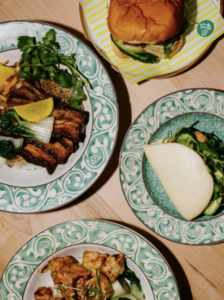
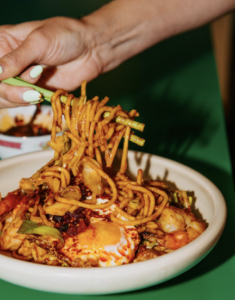
Event Menu
Grazing
Cheese and charcuterie
Vegetable crudité, sweet chilli and sour cream dip, tofu, sesame and yuzu dip
Taro and potato chips, lime, chilli and nori seasoning
Family Style
Fried chicken with maple-chilli glaze, buttermilk ranch and BB pickles
Roasted kabocha squash, sesame and chilli
Yellow vegetable curry, eggplant, green beans, squash, tofu
Grilled gai lan, toyomansi, Annato oil
Roasted pork belly, pears and fennel pickle, cilantro sauce
Naked and dirty rice
Dessert
Fruit salad sweet coconut dip
Mini banana pudding cups
Mini mango tapioca cups
The Graduate Student Paper Award recognizes scholarly excellence and encourage participation of graduate students. The award includes a $200 prize, a one-year CAFS membership, and a complimentary ticket to the CAFS Social Event, where the prizes will be awarded.
Lifetime Achievement Award: honours individuals whose enduring scholarship, leadership, and public engagement have profoundly shaped food studies in Canada. The award celebrates visionaries and pioneers and recognizes sustained contributions that advance critical research, strengthen institutions, mentor emerging scholars, and deepen collective commitments to just and sustainable food systems. The award includes a complimentary ticket to the CAFS Social Event, where the prizes will be awarded.
About the Workshop: From the seed to the glass – The journey of wine: This workshop uses wine as a lens to explore food systems, ethics, place-based knowledge, and intergenerational farming. Led by John Carlo Meli, a wine educator and tenth-generation grape farmer, you will engage with concepts such as terroir, labour relations, and value systems from seed to table. Drawing on experience in his family’s vineyards in Pachino, Sicily, and his work with wine merchants in St. Emilion and Bordeaux, as well as supplying wines to the LCBO, Meli brings a practitioner-scholar perspective to key questions: how taste conveys place, how markets shape agricultural decisions, and how organic and fair-trade certifications shape global food economies. As the importer who introduced the first certified organic and fair-trade wine to the LCBO, he also speaks to the political economy of wine in Canada. The workshop is a guided tasting. You’ll conduct comparative sensory analysis of selected wines, exploring how flavour, acidity, structure, and aroma reflect soil, climate, cultivation practices, and human care. This tasting will connect sensory experience to terroir, sustainability, ethics, and knowledge transmission.
Book Launch: Join us for a celebration of new books by Canadian food studies scholars and CAFS members published between 2024 and 2026. This session will feature a friendly conversation with authors about their recent publications, the ideas that inspired them, and their contributions to food studies scholarship. This year, we are pleased to profile three newly released books and the authors behind them.
Indigenous Insights for Planetary Health and Sustainable Food Systems
Learning from International Case Studies
By Shailesh Shukla, Priscilla Settee, Noa Kekuewa Lincoln
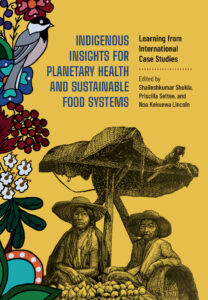 Indigenous Insights for Planetary Health and Sustainable Food Systems builds upon the indispensable resource Indigenous Food Systems (Settee and Shukla, 2020). Cultivating new partnerships with scholars, community organizations, and grassroots practitioners across the globe, this follow-up volume aims to improve the understanding and outcomes of planetary health and sustainable food systems through cross-cultural sharing of Indigenous-focused research and experiences.
Community-based case studies guide readers to understand the emergence, potential application, and renewal of Indigenous food systems and planetary health innovations and their role in supporting the well-being of their communities and lands and advancing the global vision of sustainable futures through interdisciplinary perspectives.
This novel edited volume is well-suited for courses in Indigenous studies, food studies, human geography, Indigenous and public health, health policy, cultural studies, global studies, Indigenous governance, environmental studies and science, natural resources and environmental management, and several interdisciplinary programs with a special focus on Indigenous knowledges and perspectives on agriculture, food systems, and planetary health.
School Food Programs in Canada: Models for Success
Edited by Amberley T. Ruetz and Rachel Engler-Stringer
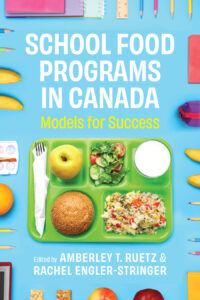 School food programs are recognized worldwide as contributing to improved health, education, and economic growth. As Canada looks to roll out its national school food program, School Food Programs in Canada, the first book on the subject with a specifically Canadian focus, provides valuable, timely examples of where and how these programs are working.
A historical overview of policy and advocacy is followed by case studies of existing programs, including in the Northwest Territories, Alberta, Quebec, Newfoundland, Nova Scotia, and PEI. The final chapter surveys school food policy in six other countries. Together, these domestic and international examples provide detailed, replicable lessons for Canadian policy and practice, addressing funding models, staffing and facilities challenges, food sovereignty, and food literacy.
School Food Programs in Canada brings together contributions from a truly interdisciplinary slate of authors, including university-based researchers, community-development organizers, educators, public health workers, and those working to inform health and food policy. By connecting the efforts of provincial, Indigenous, and federal policy-makers and practitioners, this book provides a framework for determining which program models and features best serve diverse communities – from Indigenous populations in the Far North to multicultural urban centres and rural regions.
Written to provide tools for policy-makers and practitioners, as well as for researchers and students in the fields of education, social policy, health and well-being, this interdisciplinary book will serve those looking for background on school food programs as well as models for future programming and policy direction.
Shy Cat and the Stuff-the-Bus Challenge
By Dian Day
Illustrated By Amanda White
Presented by Elaine Power
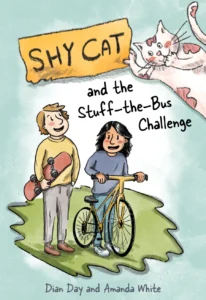 Introducing best friends Mila and Kit in a graphic novel about stray cats, school food drives, and hungry kids.
Best friends Mila and Kit spend their days doing fun things: they go to the skate park, play Truth or Dare, and pet the neighborhood cats. Mila’s favorite thing to do is draw her Shy Cat comics. But Kit’s is probably eating afternoon snacks. The first time Kit went to Mila’s house, he ate three bananas in a row without asking! Mila thinks rude is rude, but her mom says that sometimes, rude is just hungry.
When Kit has a meltdown at school over a “best before” date, a bag of apples, and a dented can—Mila realizes there’s something important she might have missed about her friend. And it all starts with their school’s Stuff-the-Bus food drive challenge.