Plenary Highlights
Learn more about the Plenaries and the speakers that will bring these discussions to life:
Monday (Grounding & Planting): Indigenous Food Sovereignty
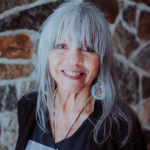 Dawn Morrison locates herself in the Indigenous Food Sovereignty movement as a Secwepemc woman in leadership. Her role as Founder/Curator of Research & Relationships for the Working Group on Indigenous Food Sovereignty, was inspired by the intellectual foundation laid by Elders, ancestors, and former leaders in her Neskonlith Secwepemc community who upheld a long legacy of political activism. Her work towards social and environmental justice is intrinsically motivated by her lived experience as the eldest survivor of intergenerational trauma passed down from the Kamloops Indian Residential School where her Mother, maternal Grandmother, and many relatives were forced to spend their childhoods. Since 1983, Dawn has studied and worked in horticulture, agriculture, Aboriginal Adult Basic Education, ethno-botany, and restoration of natural systems. She returned home to reclaim her sense of Secwepemc identity in the year 2000, and began her work on community self-development in her home Neskonlith Secwepemc community in the framework of eco-cultural restoration, and Indigenous food sovereignty. She has since demonstrated her commitment and ability to facilitate social learning on the edges of diverse cultures and realities in land and food system networks more broadly. Dawn has developed an Indigenous Third Eye Seeing (ITES) Methodology to guide the process of creating ethical spaces of engagement in land and food systems policy, planning and governance. The intention is to increase agency of Indigenous Peoples and allied friends to address the issues underlying the wicked systemic problems of coloniality, climate change, corporate control, and the erosion of social and ecological integrity of Indigenous land, food, culture and social systems. Some of the projects Dawn is leading include: “From the Ground Up” Toolkit for Indigenous Food Sovereignty – Train the Trainers, Wild Salmon Caravan, Cwelcwelt Kuc “We are Well” Garden, Indigenous Food and Freedom School, and research projects: Mapping out and Advocating for the Establishment of Indigenous Foodland Conservation Areas, and Indigenous Food Sovereignty and Community Wellbeing Amidst a Pandemic.
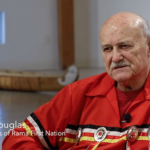
Mark Douglas
Mark Douglas is a respected Elder, Knowledge Keeper, and founder of the Mnjikaning Fish Fence Circle from the Chippewas of Rama First Nation. He is a prominent cultural advocate dedicated to protecting the ancient Mnjikaning Fish Weirs and sharing Anishinaabe storytelling, heritage, and history.

Raymond Johnson-Brown
Seeds of Sovereignty is a living, Indigenous-led reflection on what food sovereignty looks like when it is practiced, not theorized, amidst diverse First Nations, Inuit & Metis communities. Grounded in gatherings held in Iqaluit, Nunavut and Líl̓wat Nation, we will share our learnings that arose from Indigenous Community Food Centres and Indigenous Network members who are already feeding their communities through hunting, harvesting, land-based teaching, and intergenerational knowledge transfer. This submission isn’t meant to present a new model or best-practice framework. Rather, it offers a collective account of what is already happening when Indigenous food systems are allowed to exist on their own terms. Across Arctic, coastal, forest, and prairie contexts, communities are asserting food sovereignty through country food programs, youth-led harvesting, Elder-led teaching, and governance rooted in Indigenous law. These are not symbolic, but are living systems that are grounded in recirpocal relationship to land and responsibility. During the session we will name the barriers weve identified that continue to constrain this work: short-term and misaligned funding cycles, public health and licensing regimes designed for industrial food systems, limited land access, and policy environments that treat Indigenous law as opinion rather than authority. Rather than positioning communities as service providers within colonial systems, Seeds of Sovereignty reframes Indigenous food sovereignty as an expression of jurisdiction, wellness, and self-determination affirmed under UNDRIP. Participants will be invited to sit with a core question that emerged repeatedly across the gatherings: if Indigenous communities are already doing the work, what needs to shift in governments, institutions, and the food movement to protect and resource what is already alive? This session is an invitation to move beyond urgency and extraction, and toward accountability and trust at the pace of the land.
Tuesday (Connecting): Connecting to the Work of the Common Ground Food Forum Network Hosts
This plenary explores the connections that strengthen our food systems and communities. This session will highlight the networks, partnerships, and collaborative spaces that make up the Common Ground Food Forum, while helping participants discover where their own work, interests, and experiences can contribute. Join us to connect, share ideas, and find your place within a growing movement for more resilient and equitable food systems.
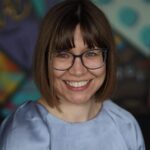
Dr. Kristen Lowitt is Associate Professor in the School of Environmental Studies at Queen’s University. Her research focuses on sustainable food systems and food systems governance. Particular interests include small-scale fisheries, basic income, and food movements. Her research is based in partnership-building and co-production of research and knowledge with communities. She is Co-Chair of the Canadian Association for Food Studies.
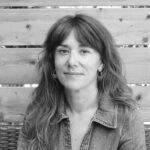
Dr. Karen Foster is Professor of Sociology in the Faculty of Arts and Social Sciences at Dalhousie University, where she also held the Canada Research Chair in Sustainable Rural Futures for Atlantic Canada from 2014 to 2025. Dr. Foster’s research examines rural life in Atlantic Canada, with a current focus on food systems, economy, work and labour, and community development. She directs the Rural Futures Research Collaborative and has active research projects on topics such as occupational succession in rural small businesses, rural families care/work relations, rural medically tailored meal delivery and meanings of work. She frequently works with rural communities and organizations to help them answer questions and solve problems through research. She directs the Common Ground Canada Network, a national partnership of social science and humanities researchers, community organizations, Indigenous leaders, farmers, policymakers, and civil society groups working together to transform Canada’s agriculture and food systems for a sustainable, net-zero future.

Aaron Vansintjan is Policy Researcher of Food Secure Canada. He has consulted for political parties and non-profits on food policy for over a decade, and is a published author of two books on economic and environmental policy.
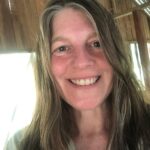
Moe Garahan has been working on food and farming issues since 1995. Focused on community development and community economic development approaches, she has facilitated the establishment of many ongoing community and regional food initiatives, (including Just Food) while supporting provincial and coast-to-coast-to-coast food systems change (presently includes Sustain Ontario, Food Communities Network and Common Ground Network). Since 2004, she has been the Executive Director of Just Food, working with teams to integrate food access and food localism within the mixed urban and rural settings of the Algonquin/Ottawa region.
Wednesday (Pruning): Food systems tensions, challenges and how we work together
“Food Systems Tensions, Challenges, and How We Work Together” invites participants into an honest conversation about the complexities shaping our food systems today. From competing priorities and limited resources to differing perspectives and lived experiences, this session will explore the challenges we face and the opportunities for collaboration. Together, we’ll discuss approaches to building stronger relationships, navigating tensions, and working collectively toward more just, resilient, and community-centered food systems.
Moderator:
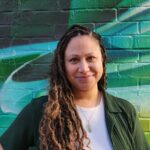
Marissa Alexander, RD, MA-IS, Bio(she/they) is the Executive Director of Food Secure Canada and Owner of UpRoot Consulting. She works to integrate her passions of anti-racism, food security, and equity in all areas of her work. When she is not focused on social justice work, she likes to spend time with family, friends, and her dogs. You can often find her crafting or creating, and she tries to include humour in her work as much as possible.
Speakers:

Sharita Henry‘s experience sits at the intersection of food justice, community development, and policy. Sharita holds an undergraduate degree from the University of Waterloo, and a Master’s in Community Development from the University of Victoria, where her research focused on capacity-building for Black food sovereignty. She is preparing to begin her PhD studies at the University of Toronto this fall, where she will also be joining Massey College as a Junior Fellow.
Sharita is a food systems thinker and community-focused leader with a packed resume spanning government, research, journalism, consulting, agriculture, art, start-ups, and academia, alongside over a decade in food justice. With a long history of environmental and social activism, Sharita brings deep experience in community-based social marketing, stakeholder engagement, social ventures, and grassroots organizing to her role as Director of Programs at FoodShare Toronto. Her work consistently bridges research and practice, with a strong emphasis on equity, anti-racism, and community-led solutions.
Sharita is committed to learning and education in anti-oppression, abolition, decolonization, restorative and rehabilitative justice, and scaling solutions-oriented community work. A true Gemini with a million interests, Sharita can often be found tattooing (or getting tattooed), hiking, dancing, reading, writing, cooking, and gardening.
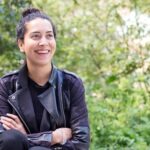
Jasmine Ramze Rezaee is the Director of Policy and Community Action at Right To Food. A longtime social justice organizer and strategist, she has spent the past two decades working across movements focused on poverty, food insecurity, and gender justice. She writes about a range of issues and lives in Toronto/Treaty 13 with her family.
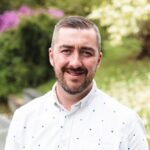
Joshua Smee is the CEO of Food First NL, a provincial nonprofit organization that works with communities across Newfoundland & Labrador to advance the right to food and to further their vision of a province where everyone can eat with joy and dignity.
Passionate about systems change and the power of collective action, Joshua has taken a lead role in many coalitions and campaigns. He co-chairs the provincial Food Security Working Group with the Government of NL, helped launch the new NL Anti-Poverty Coalition, and sat on the province’s Health Accord Task Force.
Outside of work, Joshua sits on many boards and committees and has been heavily engaged in work around civic engagement, local food, and the arts.
Thursday (Growing): The Current Global Moment and Local Food Resilience

As a Local, National and Global Food Justice Advocate, Celeste’s work centers around Indigenous Food Sovereignty, Land Justice and Indigenous Human Rights. She is the focal point for the Civil Society and Peoples Mechanism (CSIPM) for North America at the UN FAO Committee on World Food Security, the Co-Chair of the International Committee and Special Advisor on Indigenous Policy for The National Farmers Union (NFU), Co-Chair of the Peel Food Action Council (PFAC), member of the National Canadian Food Security Policy Group and member delegate of La Via Campesina, the International Peasants Rights Collective.

Rachael Vriezen is a PhD Candidate at the Balsillie School of International Affairs at the University of Waterloo. Her research focuses on corporate concentration and power in the grocery retail sector, with a particular emphasis on the Canadian and Australian contexts. Other research interests include food security, food governance – particularly the governance of corporate actors – and the development and evaluation of research methods. She holds a master’s degree in Food, Agricultural and Resource Economics from the University of Guelph, as well as bachelor’s degrees in International Development and Economics, also from the University of Guelph.